Skip link

Replacement of water networks (PG)

Information

Customer: Umbra Acque SpA
Project: Complete districting of the distribution network with reduction of losses in the territory managed by Umbra Acque SpA Lot No. 2 - Rehabilitation of lines
Designer: Marco Cottino
Services: Executive Design, Safety Coordination during design phase, Construction Management, Safety Coordination during execution phase of network replacement interventions aimed at reducing water losses in distribution networks
Location: Perugia (PG)
Status: in progress
Year: 2023 - in progress

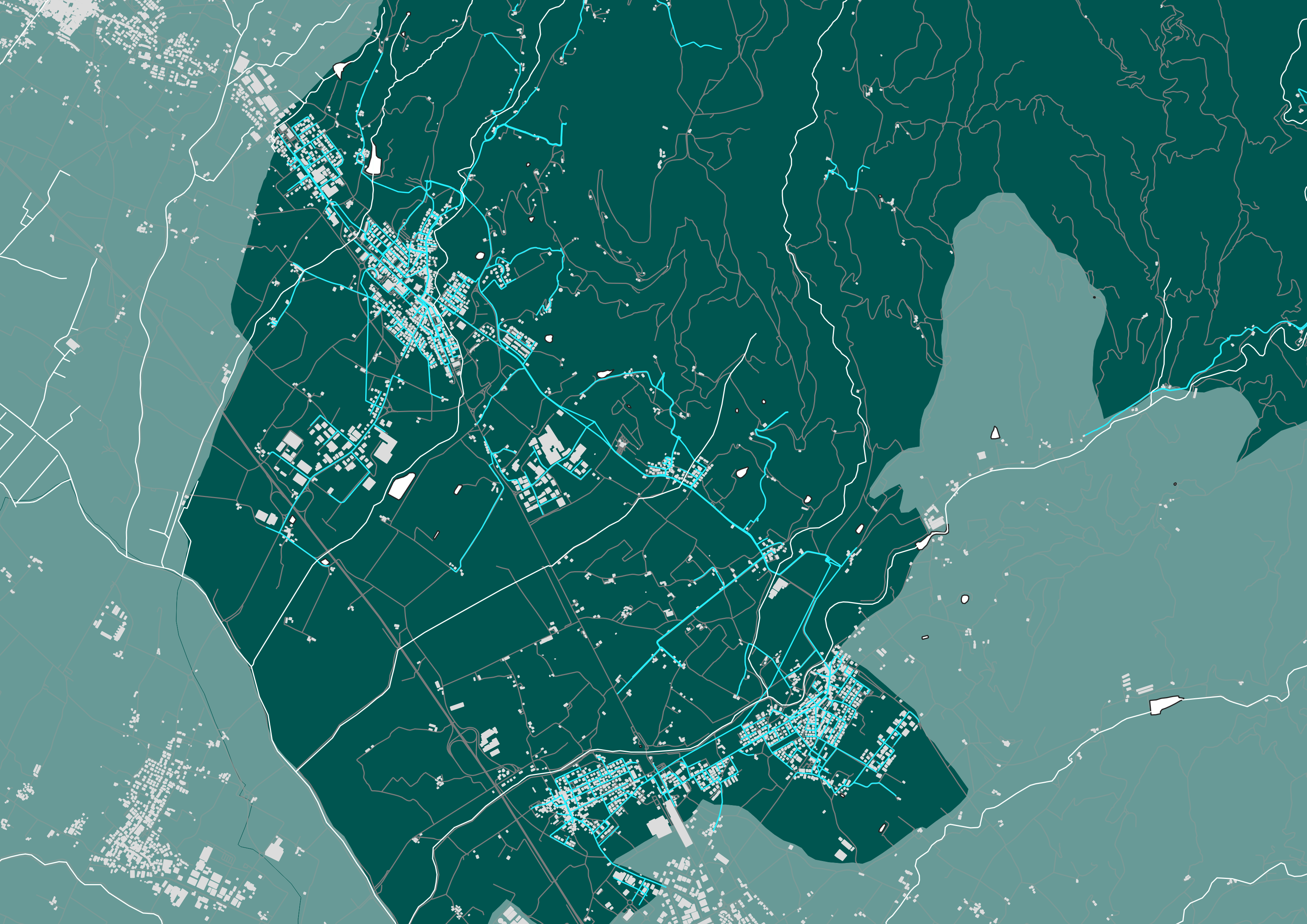
The aqueduct network replacement intervention in question is financed by the European Union "Next Generation Eu" through the PNRR within the PNRR-M2C4-I4.2_082 intervention "Complete districting of the distribution network with reduction of losses in the territory managed by Umbra Acque S.p.A." The service includes two water mains rehabilitation works in the Selci Lama hamlet of the municipality of San Giustino (PG).

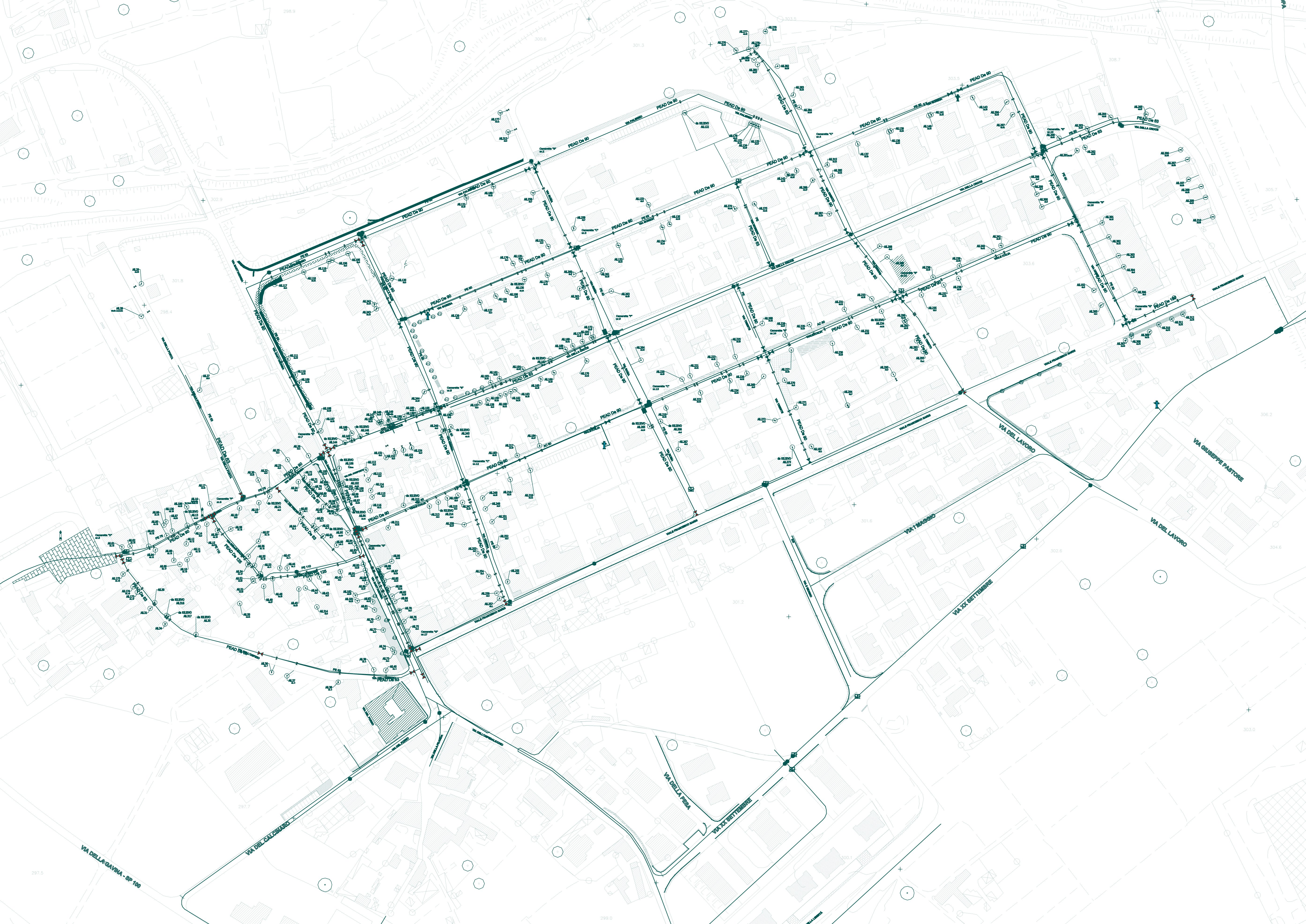
The executive design phase, currently completed, involved two design segments (Selci 1 and Selci 2) with the decommissioning and laying of about 6.5 km of new network. The choice of route and design diameters was derived from the analysis of the actual state with the objective of reducing leakage and increasing aqueduct resilience. The design was supported by hydraulic modeling of the network that allowed the study of the new main backbones and the simulation of network pressures at the design state.

The Executive Design consists of laying the new network and decommissioning the existing pipelines, including testing and sanitizing the new network, connecting the existing utility connections to the new network, and starting service to the utilities. As part of the design phase safety coordination, J+S prepared the Safety and Coordination Plan (PSC) and the technical file of the work. The project area is located in the consolidated urban fabric of the municipality of San Giustino (PG), Selci Lama hamlet. The project route is located in a purely residential context with a percentage of the intervention area falling within the historic city limits.

The Selci 1 intervention is currently under construction. The framing of the work in a residential context requires that special attention be paid during construction due to the presence of housing and the usual transit of the resident population as well as the proximity of services such as schools. Traffic management has been designed specifically for each street taking into consideration the characteristics of the street, the presence of public transport lines and the type of traffic present. During construction, special attention is paid to compliance with minimum environmental criteria (CAM) and to meeting the principle of "Do No Significant Harm to environmental objectives," in accordance with the principle of "Do No Significant Harm" (DNSH). Sampling excavations carried out prior to the start of the work revealed the presence of underground utilities and interference in terms of parallelism and perpendicularity especially at intersections, which provided for the need for coordination with the contractor in order to lay the network without affecting the conditions at the state of the underground utilities. The design of connections between the new pipeline and the existing water mains required the study of operational phases to minimize costs and disruptions to users. The reconnection of the utilities to the new network involves the remaking of the connection for the entire part insisting on public property and therefore on the entire street part even in the presence of sidewalks and curbs. The tracing of utilities is carried out by the Contracting Authority prior to the intervention by the contractor by requesting the coordination of the Construction Management. Despite the remoteness of the construction site from the J+S work site, constant monitoring of the site is ensured through periodic inspections by the Construction Manager, the two Operations Managers and the Site Inspector. Safety coordination during the execution phase is carried out through inspections by the Site Inspector and the CSE.